Category

News

Heirs Energies to unlock new era of industrialisation with gas exploration

Driven by its African identity, Nigerian independent Heirs Energies operates with an in-house development approach, partnering largely with indigenous contractors

Following its inspiring success story with OML 17, the company is ready to take on further challenging projects, now eyeing the Republic of Congo.

Heirs Energies CEO, Osa Ighiehon, reveals to Oil Review Africa what it takes to thrive as an African independent in today’s energy industry and much more:

What according to you does Nigeria’s oil and gas industry need right now to attain its full potential? 

Nigeria is at a critical moment. We possess the resources and the human capital to be a global energy leader, yet we are constrained by a few critical but addressable challenges. To unlock our full potential, we must act decisively on three fronts.

First, we must establish unwavering policy certainty. The lifeblood of our industry is investment, and capital flows to jurisdictions that offer predictability and stability. We need a clear, consistent, and transparent regulatory framework, one where fiscal term are stable and approvals are streamlined. Without this foundational trust, we risk ceding competitive advantage and watching investment capital migrate to more predictable markets. There has been a lot of progress on this front in the past few years with the Petroleum Industry Act (PIA) and Presidential Directives.

Secondly, we must secure our infrastructure and consolidate the gains we’ve made. The scourge of oil theft has been a direct drain on our national treasury. However, the solution that has been deployed needs to be sustained and the threat/vulnerabilities permanently mitigated. As demonstrated with OML 17, where we moved from a 3% terminal delivery to over 99%, it is possible to secure assets through a collaborative model that integrates community engagement, corporate strategy, and crucially, the strengthened security framework provided by the government. This proven model must now be scaled nationally to protect our vital revenue streams and restore investor confidence.

Lastly, and most critically, we must execute a strategic pivot to gas. While oil built our economy, gas is the undeniable key to our future. Sitting on the largest proven gas reserves in Africa, it is an economic paradox that we remain dependent on imported fuels. Gas is the catalyst that will power our industries, generate stable electricity, and drive sustainable economic diversification. At Heirs Energies, we have moved from rhetoric to action, increasing our gas production from 70 mn standard cu/ft to 125 mn standard cu/ft. This is not merely a business decision; it is a national imperative. By prioritising gas, we can finally unlock a new era of industrialisation and long-term prosperity for Nigeria.

While digitalisation is largely being considered the key to production optimisation, do you believe it’s the sole requisite to success? 

Digital tools are important, but they are not a magic fix. Technology helps us work smarter, but it can’t replace the need for strong leadership and skilled people.

We use technology at Heirs Energies for monitoring and efficiency. But our biggest breakthroughs have come from our teams. For example, our engineers developed a low-cost way to bring old gas wells back to life. That idea didn’t come from a software programme; it came from deep understanding, out-of-the-box thinking and a solution mindset.

While digitalisation gives us better data, our success finally depends on our people – their expertise, ingenuity and commitment to safety. Its this human element that truly makes the most difference.

What is Heirs Energies’ future strategy with OML 17 and other oil and gas assets? 

Our strategy is to build on the proof point that OML 17 represents. When we acquired it, many doubted whether a Nigerian independent could revive such a complex, underperforming asset. Today, we have doubled production, restored security, and brought new energy to the domestic gas market. That success gives us the confidence to look ahead with intent.

At OML 17, we are determined to keep pushing performance higher – optimising oil output, scaling gas production further, and embedding the community partnerships that have become a hallmark of our approach. But the bigger picture goes beyond one asset, we see opportunities across Nigeria and Africa to apply our Brownfield Excellence model – identifying underperforming fields, deploying innovation and discipline, and turning them into engines of growth.

What matters to us is creating long-term value for our investors, for the communities where we operate, and for the economies that depend on reliable energy. That means expanding carefully, investing responsibly, and ensuring that every molecule we produce helps to power Africa’s development. OML 17 was the beginning – but our ambition is to shape the model of how African companies can deliver world-class results and shared prosperity, consistently and at scale.

This is the second part of a two-part interview with Oil Review Africa
Heirs Energies is putting Africapitalism into action

Driven by its African identity, Nigerian independent Heirs Energies operates with an in-house development approach, partnering largely with indigenous contractors

Following its inspiring success story with OML 17, the company is ready to take on further challenging projects, now eyeing the Republic of Congo.

Heirs Energies CEO, Osa Ighiehon, reveals to Oil Review Africa what it takes to thrive as an African independent in today’s energy industry and much more:

How would you define the Africapitalism approach? 

Africapitalism is an economic philosophy pioneered by our Heirs Holdings Group chairman, Tony O Elumelu, CFR. It provides a powerful and practical framework for a more impactful role for the business sector in Africa’s development. At its core, is the conviction that the private sector must be a primary catalyst for creating both economic prosperity and sustainable social wealth.

It’s about changing the old story where business in Africa was only about taking resource extraction. Now, it’s about making sure that every investment we make creates value, both commercially and socially, with the latter enabling and uplifting our communities whilst strengthening our economies.

For us at Heirs Energies, this is our north star. When we took over OML 17, it was our chance to prove this works. We set out to demonstrate that African capital, managed by African expertise, could not only revitalise a distressed asset, but do so in a way that delivers shared and enduring prosperity. Today, the results speak for themselves: we doubled production, restored security to the area, and, crucially, embedded community development into our core operations.

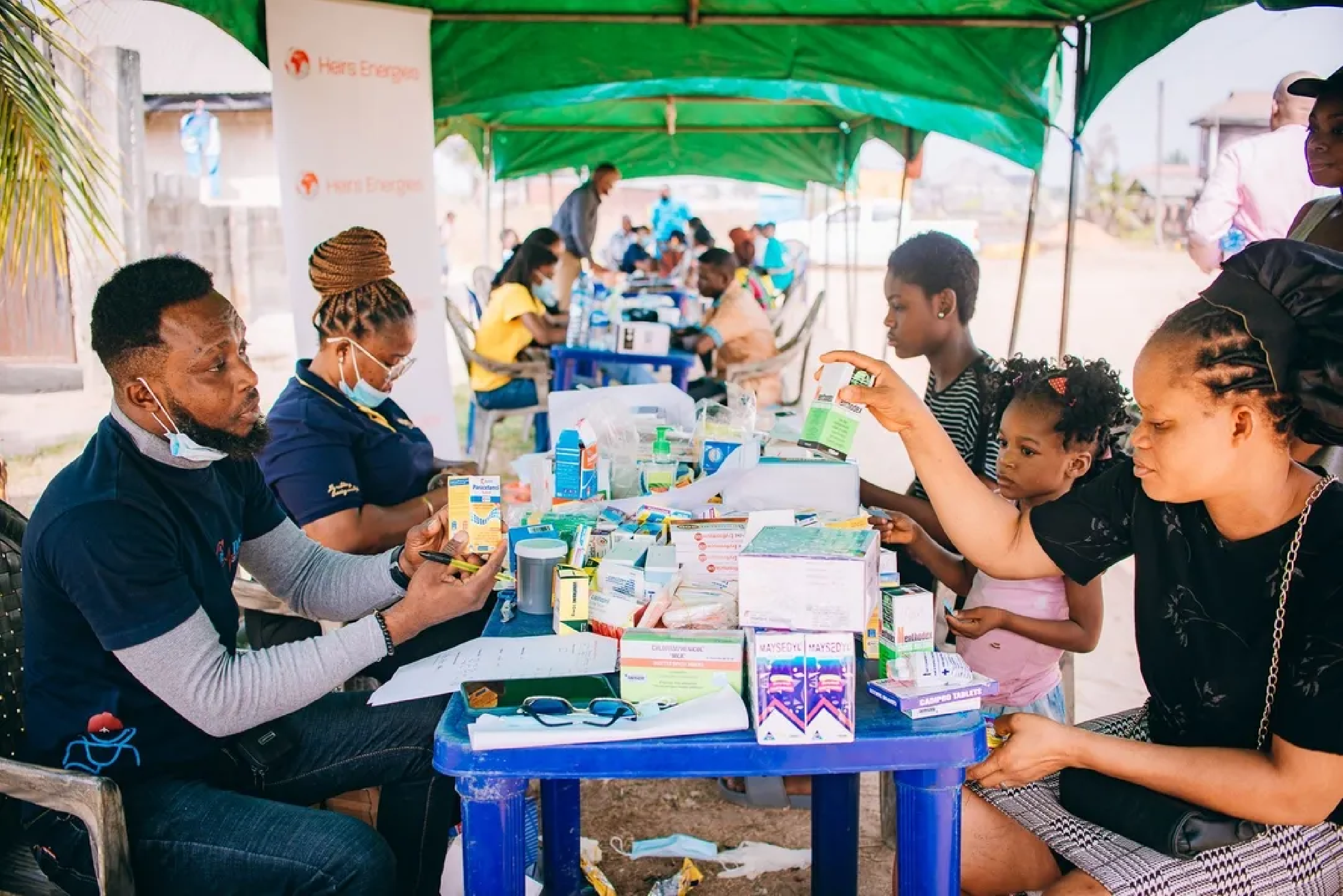
But the real success is that we did this while also funding scholarships, providing healthcare, and creating jobs for locals. For us, making a profit and having a positive social impact are two sides of the same coin. This is Africapitalism in action.

What should independents from Nigeria keep in mind while acquiring assets from IOCs? 

Nigerian independents must understand that they are not merely purchasing an asset; they are inheriting a legacy and a material responsibility. The acquisition is the simplest step. The profound challenge lies in the transformation that need to follw for the journey to end well. International Oil Companies typically divest assets that no longer fit their global portfolio, often because they are capital-intensive, have operational challenges, burdened by years of underinvestment, and entangled in complex social and security challenges. The incoming independent must be prepared for this reality from day one.

Our journey with OML 17 is a case study in successfully tackling this reality to achieve a historic turnaround. When we took over, the asset was in severe distress, with terminal delivery of field production at a mere 3% shortly after. This wasn’t an operational hiccup; it was a systemic failure, indicating near-total loss to theft and sabotage. We recognised that a purely technical or capital solution would fail. The real breakthrough came from rebuilding the entire ecosystem of trust. We engaged host communities not as a periphery activity, but as the core of our security and operational strategy, while forging strong, collaborative partnerships with government and security agencies. The definitive response by Government to oil and gas asset security that emanated, which has been sustained, is foundational to this spectacular outcome. This catalytic work enabled us to elevate reconciliation to over 99%; a transformation that turned a dying asset into a secure, reliable national contributor.

Critically, independents must resist the inertia and excuses that have plagued and caused the decline of the past two decades. Our advantage is not in the depth of our balance sheets, but in our delivery and growth focus, our solution-mindedness, and our genuine desire to develop our communities and countries. For instance, at Heirs Energies our engineers pioneered a rigless through-tubing intervention technique that restored shut-in wells at 65% lower cost and 32% faster than conventional methods. This innovation, born of a necessity to do more with less, unlocked significant value and added millions of cubic feet of gas to the domestic market.

Ultimately, the most vital lesson is this: our social license is as important as our legal license. The community is not a hurdle to overcome; they are the most crucial stakeholder we must engage with for sustainable operations. If they are not active partners in our success, we have no durable foundation to build upon. For the Nigerian independent, success is a blend of operational innovation, genuine partnership, strategic security and tenacity.

This is the first of a two-part interview with Oil Review Africa

From Risk to ROI: Heirs Energies’ OML 17 Success

Osa_

Heirs Energies’ acquisition of Oil Mining Lease (OML) 17 in 2021 was seen as a bold, risky move by industry insiders. Heirs Holdings invested over $1 billion for a 45% interest in the strategic OML 17 asset from Shell, ENI, and Total. The deal captured headlines across Africa’s oil and gas sector.

OML 17, in the Niger Delta, was once a thriving producer but suffered from years of underinvestment, security challenges and deteriorating infrastructure. By the time Heirs Energies acquired it in 2021, production had dropped below 20,000 barrels of oil equivalent per day (boepd). Fast forward to 2025, and this underproducing asset is one of Nigeria’s most compelling turnaround stories. Over four years, Heirs Energies more than doubled oil output and significantly increased gas production.

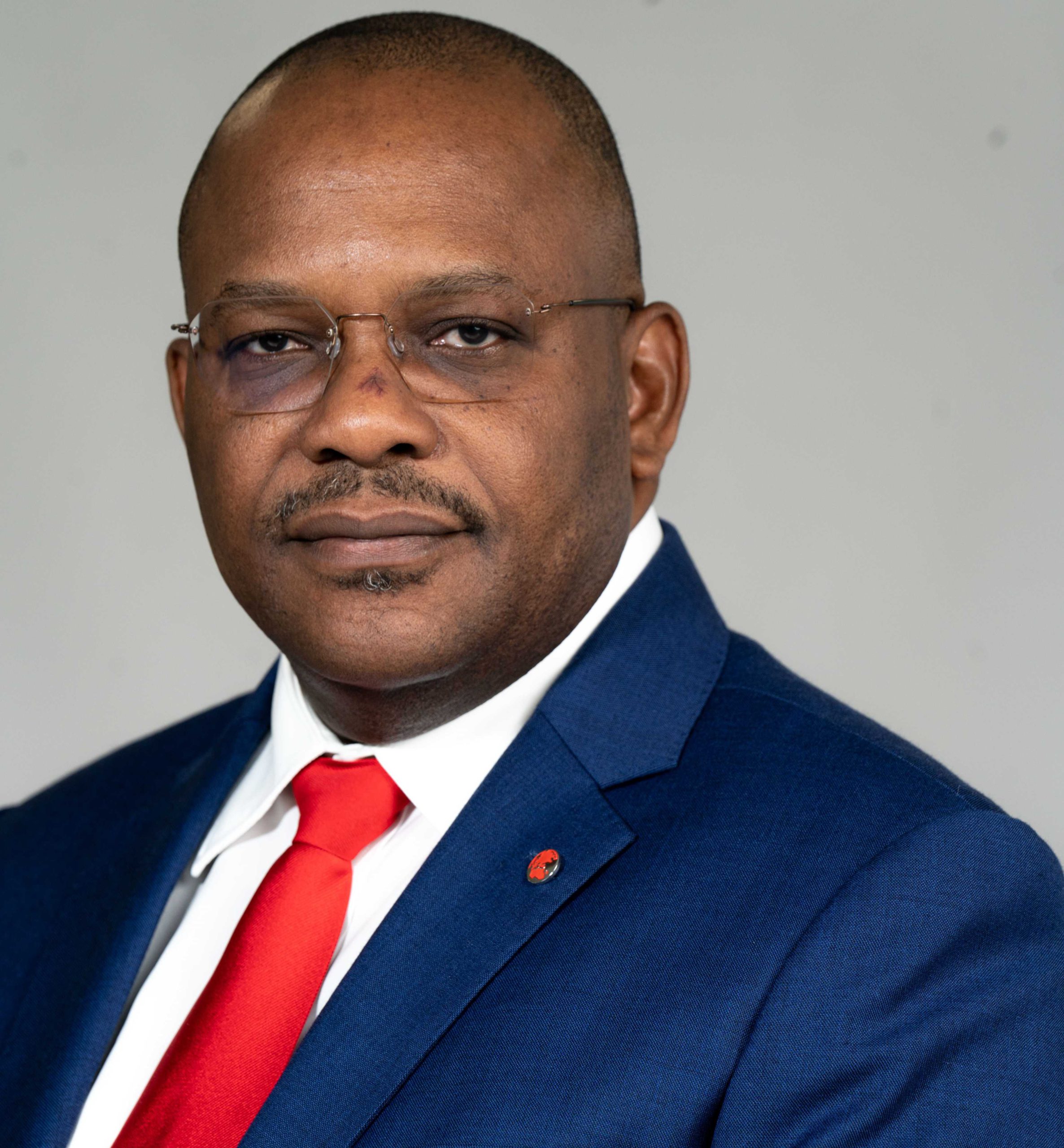
The man behind the acquisition, Tony O. Elumelu, CFR, took a bold bet guided by his philosophy of Africapitalism, the belief that Africa’s private sector must lead in delivering both economic prosperity and social wealth. By committing over $1 billion to acquire OML 17, he signalled confidence in Africa’s resources, its people, and its future. To turn that vision into reality, he entrusted, CEO of Heirs Energies Osayande Igiehon, a proven operator with deep technical expertise and industry credibility. Igiehon has since led the turnaround, applying discipline, innovation and stakeholder collaboration to transform OML 17 into one of Africa’s most compelling brownfield success stories.

Igiehon explains it wasn’t an easy path, “For a decade, we faced setbacks; oil price crashes, exchange rate pressures, crises in the Niger Delta, and financing challenges. But we persisted and successfully closed the deal in 2021, which was later recognised as Africa’s M&A Deal of the Year.”

He adds, “OML 17 was a classic brownfield value opportunity, a quality asset underperforming due to underinvestment and security challenges. We believed that with local know-how, our Africapitalism philosophy and Brownfield Excellence, we could unlock its full potential.”

A model for unlocking Africa’s brownfields 

But, how exactly did Heirs Energies revive this once-failing asset?

According to Igiehon, it started with the basics: security and stakeholder trust. “We collaborated with the government, security forces and host communities, and restored production reconciliation levels from just 3% to over 99%.”

Next, they tackled infrastructure integrity. They repaired ageing flowlines and de-bottlenecked facilities, which led to the reactivation of over 100 dormant wells. The company focused on safety-driven operations, adopted fast decision-making, cost discipline and created a culture where everyone is a safety officer. The result? Heirs Energies recorded over 1.5 million safe manhours and 1,627 Lost Time Injury (LTI)-free days by the second quarter of 2025.

A major standout in the OML 17 story was the company’s use of innovative, low-cost interventions for gas scale-up. Eschewing expensive options, Heirs Energies used rigless through-tubing techniques that delivered quick results. In November 2024, the Agbada-68T well was restored using this approach, followed by Agbada-67T in August 2025, adding a combined 65 MMscf/d of gas capacity.

“Our technical team provided smart, tailored solutions that delivered enormous results. The improvements exceeded expectations because of team execution and innovation,” says Igiehon proudly. A senior technical executive adds: “By applying through-tubing solutions instead of costly workovers, we cut execution cost by 65% and time by 32%, while delivering 45 MMscf/d from Agbada-67T alone. This is the model for unlocking Africa’s brownfields.”

The evidence is clear – their strategy works. Oil production has more than doubled from the 20,000 boepd (2021) to consistently exceeding 50,000 boepd, and gas output climbed from 70 MMscf/d to around 125 MMscf/d.

Blueprint for Africa

For Heirs Energies, OML 17 is not just a success story — it is a blueprint for excellence and innovation. Igiehon adds, “Yes, our Brownfield Excellence playbook is repeatable wherever there is a viable reservoir core. The model is clear.”

  • Secure the asset and win stakeholder trust
  • Restore infrastructure integrity and flow assurance,
  • Apply smart, low-capex interventions (rigless through-tubing),
  • Operate lean with a strong safety culture
  • Build long-term value

These seemingly simple steps transformed a struggling, underperforming field into a thriving production hub. The revival of OML 17 is a testament to vision, resilience and innovation. And for Heirs Energies, it is proof that an African-owned and African-led company can take on the toughest challenges—and win.

Posted by Mining Business Africa

Made In Nigeria: Heirs Energies Leans On Local Talent To Revive OML 17

Obigbo-Flow
Field Worker

With investments in training and indigenous contractors, Heirs Energies restored production at a once-struggling asset, signalling confidence in Nigerian expertise and the future of domestic energy.

When Heirs Energies took over Oil Mining Lease (OML) 17 in 2021, the asset was struggling. Production had dwindled and infrastructure was ageing. Four years later, the story has changed dramatically: oil output has more than doubled, gas production has surged, and the field is now run entirely by Nigerians.

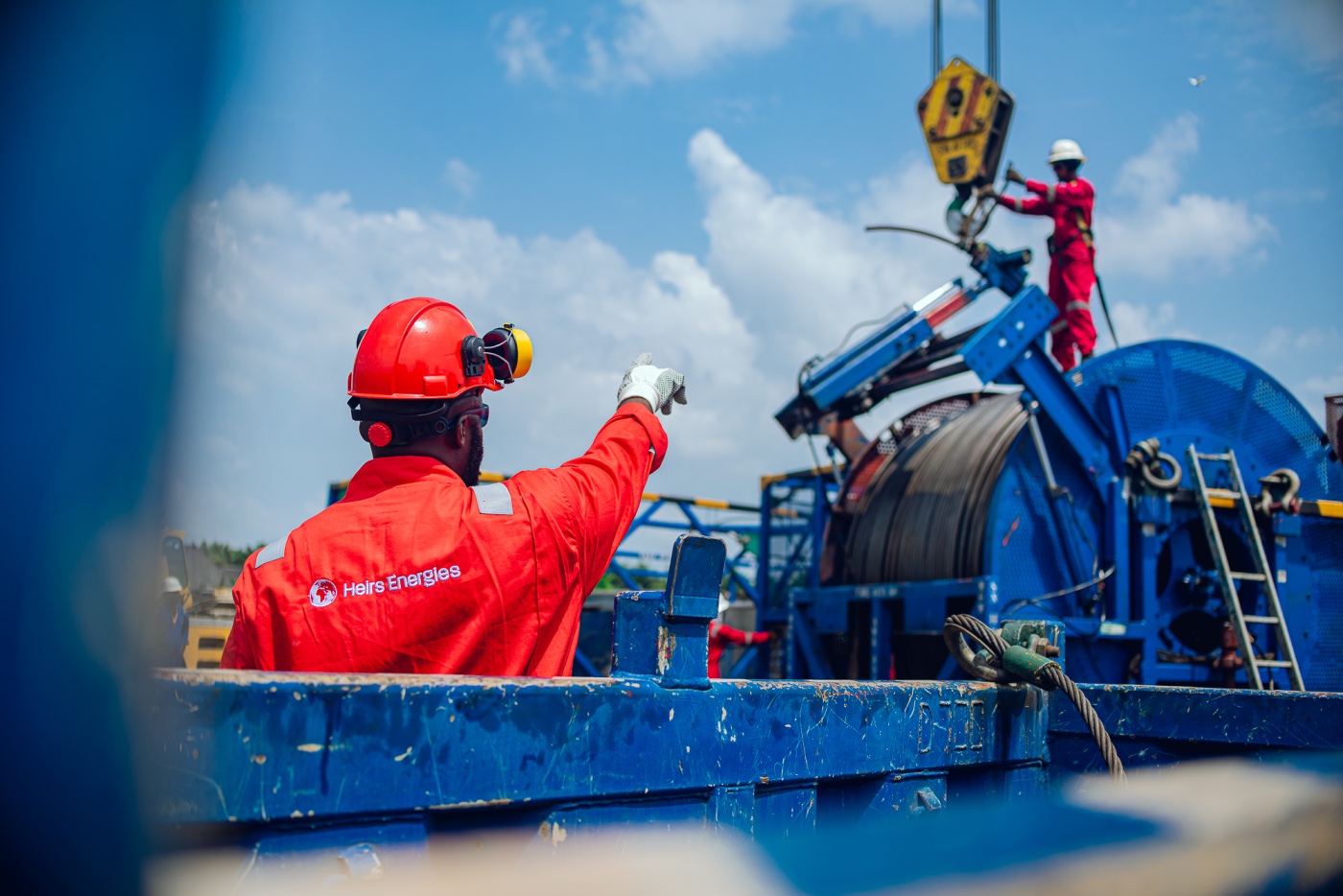
Heirs Energies, Africa’s largest indigenous-owned energy company, deliberately bet on local capacity. Instead of relying on costly foreign consultants, the company staffed their over $1billion investment, OML 17, with a 100% Nigerian workforce and ensured that 95% of contracting was awarded to indigenous firms.

“We believe in ownership, speed and resilience,” says Osayande Igiehon, CEO of Heirs Energies. “Local teams understand terrain, culture and communities better. Building Nigerian capability secures our long-term licence to operate.”

Obigbo-Flow

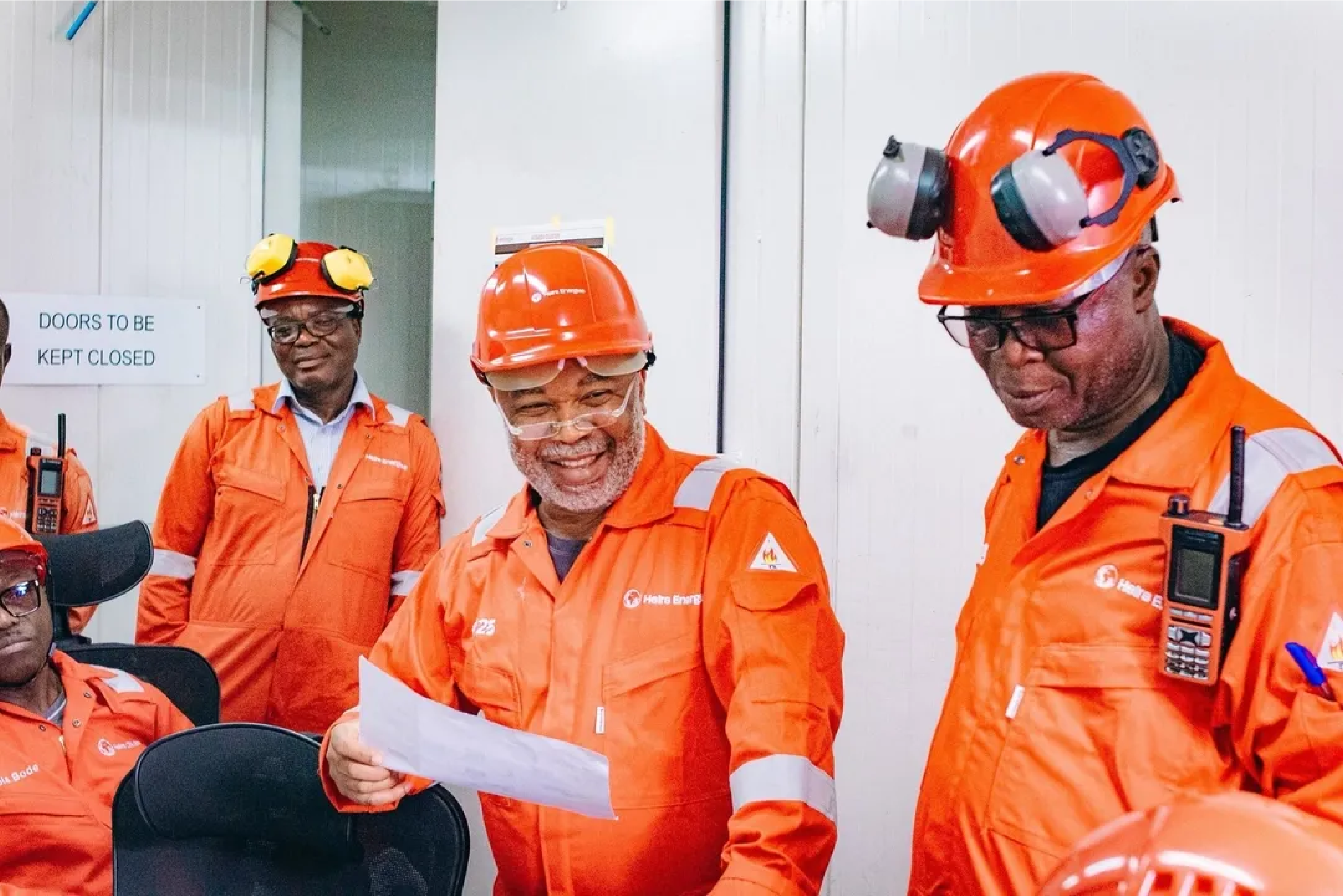
This focus on people and culture has been a large part of the transformation.  Vice President of Human Resources,  Ms Eluemuno` Olumagin, explains: Heirs Energies has strategically assembled a phenomenal team and fostered an enabling culture that drives innovation and challenges the status quo. Our unwavering commitment to developing talent and contractor capacity has culminated in a highly skilled Nigerian workforce that successfully and safely operates one of the most complex assets in the country. This performance is a compelling demonstration that African organisations, through strategic people investment, can compete and excel on the global stage.”

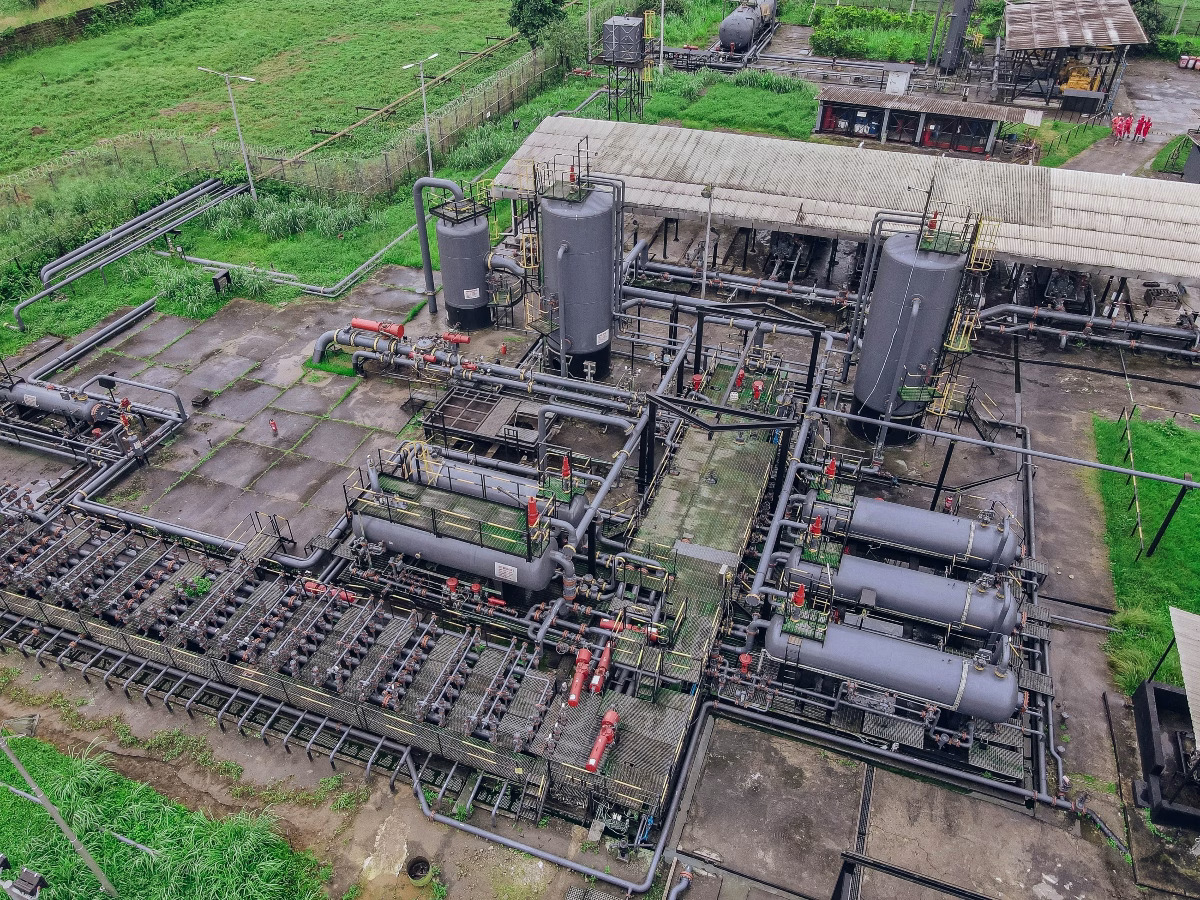
The results speak for themselves. Oil production in OML 17 rose from around 20,000 barrels of oil equivalent per day  (boepd) in 2021 to consistently exceeding 50,000 boepd in 2025, while gas output climbed from 70 million standard cubic feet per day (MMscf/d) to around 125 MMscf/d. Now, Nigerian engineers and contractors manage five flow stations, two Associated Gas Gathering (AGG) plants, and two Non-Associated Gas (NAG) plants. The ripple effect has boosted the economy of Rivers State and beyond, creating jobs and strengthening local supply chains.

Reaching this point involved overcoming significant obstacles. According to Igiehon, three hurdles stood out:

  • Skills: Addressed through structured training programmes, mentorship opportunities, and partnerships with original equipment manufacturers to facilitate on-the-job learning.
  • Processes: Outdated systems were replaced with lean, value-driven operations and global Health, Safety and Environment standards.
  • Vendors: Capacity was expanded to build a 95% indigenous contractor base, keeping jobs and spending in Nigeria.

Once these foundations were in place, the company focused on repairing and expanding OML 17. Ageing pipelines were fixed, bottlenecks were removed, and more than 100 dormant wells were reactivated. Safety became a core value: staff were trained to see themselves as safety officers, leading to over 1.5 million safe man-hours and 1,627 Lost-Time Injury-free days by mid-2025.

On the ground, ingenuity further drove success. Rather than relying on costly interventions, Heirs Energies scaled up gas production using innovative local solutions such as low-cost, rigless through-tubing. In November 2024, the Agbada-68T well was restored using this approach, followed by Agbada-67T in August 2025. Together, they added 65 MMscf/d of gas capacity.

“OML 17 was a classic brownfield value opportunity,” Igiehon reflects. “It was a quality asset underperforming due to underinvestment and security challenges. We believed that we could unlock its full potential with local know-how, our Africapitalism philosophy, and our commitment to brownfield excellence.”

Looking ahead, if this model succeeds in the long term, Heirs Energies may well set a precedent for indigenous operators across Africa: ownership of skills and suppliers, investment in domestic gas, and nimble technical interventions to revive underperforming assets.

For Nigeria — and for Africa more broadly — it is a powerful example of what can be achieved when local solutions are implemented by local hands, delivering prosperity for communities while securing the continent’s energy future.

Source: Africa.com

Africa’s energy future: Why optimism is warranted

BAC Visit
By Osa Igiehon
October 6, 2025

As Africa Energy Week wraps up in Cape Town, we are faced with a pressing question: Can we genuinely fulfill the promise of eradicating energy poverty by 2030?

The answer hinges not on foreign investment or external solutions, but rather on a crucial factor—African responsibility for our own challenges.

Currently, around 600 million Africans live without electricity. In Nigeria alone, over 85 million individuals lack reliable access to power, despite the continent’s vast natural gas reserves that could potentially electrify the region.

This paradox of resource abundance juxtaposed with energy scarcity highlights a significant crisis of purpose and execution within our energy sector.

The real issue is not whether Africa can bridge this debilitating energy gap; it is whether we, as Africans, are prepared to take ownership of the problem and act with determination to find solutions.


BAC Visit

Breaking free from dependency

For far too long, Africa’s energy narrative has been dictated by external forces. Policies have been crafted by consultants, timelines set by financiers, and agendas shaped by global institutions.

This dependency has fostered a culture of blame, where external factors such as sanctions, market fluctuations, and investor hesitance are cited as reasons for our failures.

However, these excuses do not account for the fact that proven reserves remain untapped, gas continues to flare while millions remain in darkness, and oil production has seen a decline over the past two decades.

The uncomfortable truth is that Africans must develop and implement solutions that are grounded in our local realities.

No one understands our complexities better than we do, nor do they care more about our development. The moment we take full ownership of our challenges is the moment we can begin to make real progress.

Defining Accountability in Energy Management

Accountability is not merely a buzzword; it is a measurable standard. Take Nigeria’s OML 17, for example—one of the country’s most intricate onshore assets.

Under new management, production doubled within just 100 days, achieving a remarkable 99.8% reconciliation factor in a region historically plagued by losses.

Every drop of oil reached the terminal, and every molecule of gas contributed to Nigeria’s domestic market, powering homes and industries alike.

The success of OML 17 serves as a replicable model for other countries like Congo, Angola, and Gabon, which face similar challenges with aging infrastructure and declining production.

The methodology is proven, the approach scalable, and the results demonstrate that African-led operations can achieve world-class performance when accountability is prioritized.

These achievements did not arise from foreign expertise or massive capital influxes. They emerged from rejecting the notion that theft and inefficiency are inherent to African operations.

When Africans apply their skills with purpose, create transparent systems, engage communities as partners, and hold themselves to high standards, transformation is not just possible—it is inevitable.

The Ambitious Goal of 2030

Can Africa truly eliminate energy poverty by 2030? While the timeline is undeniably ambitious, the focus should not solely be on the date itself but rather on establishing the systems and local ownership necessary to make progress a reality.

To meet the energy needs of the continent, Africa requires approximately $2 trillion in infrastructure investment by 2030.

Current investment levels fall significantly short of this target, and global capital increasingly favors markets with proven governance.

To attract the necessary investment, we must demonstrate that African operations can yield returns, safeguard assets, and benefit local communities.

Optimism should not stem from wishful thinking but from tangible evidence that Africans can seize control of their destiny. Each successful operation and community partnership serves as proof that the narrative of needing external management is outdated.

Africa’s energy future

Africa’s energy future must transition from a history characterised by extraction to one focused on sustainable development.


Medical Outreach

This shift requires measurable commitments: building local workforces, investing in training, developing indigenous expertise, engaging communities as partners, adhering to global standards, and investing local capital alongside foreign investments.

Energy poverty will not dissipate simply because 2030 arrives; it will end when Africans collectively decide that living in darkness is unacceptable and take decisive action to change it. The resources, technology, and talent are already present.

What remains is the courage to fully embrace the challenge and propel the continent toward energy sufficiency.

As we move forward, it is imperative that we harness our collective potential and take ownership of our energy future.

The author, Osa Igiehon is a transformational energy business executive, thought leader and innovator. He is the CEO of Heirs Energies, an African energy company. These views are his own and do not necessarily reflect those of his organisation.

Source: Trtafrika

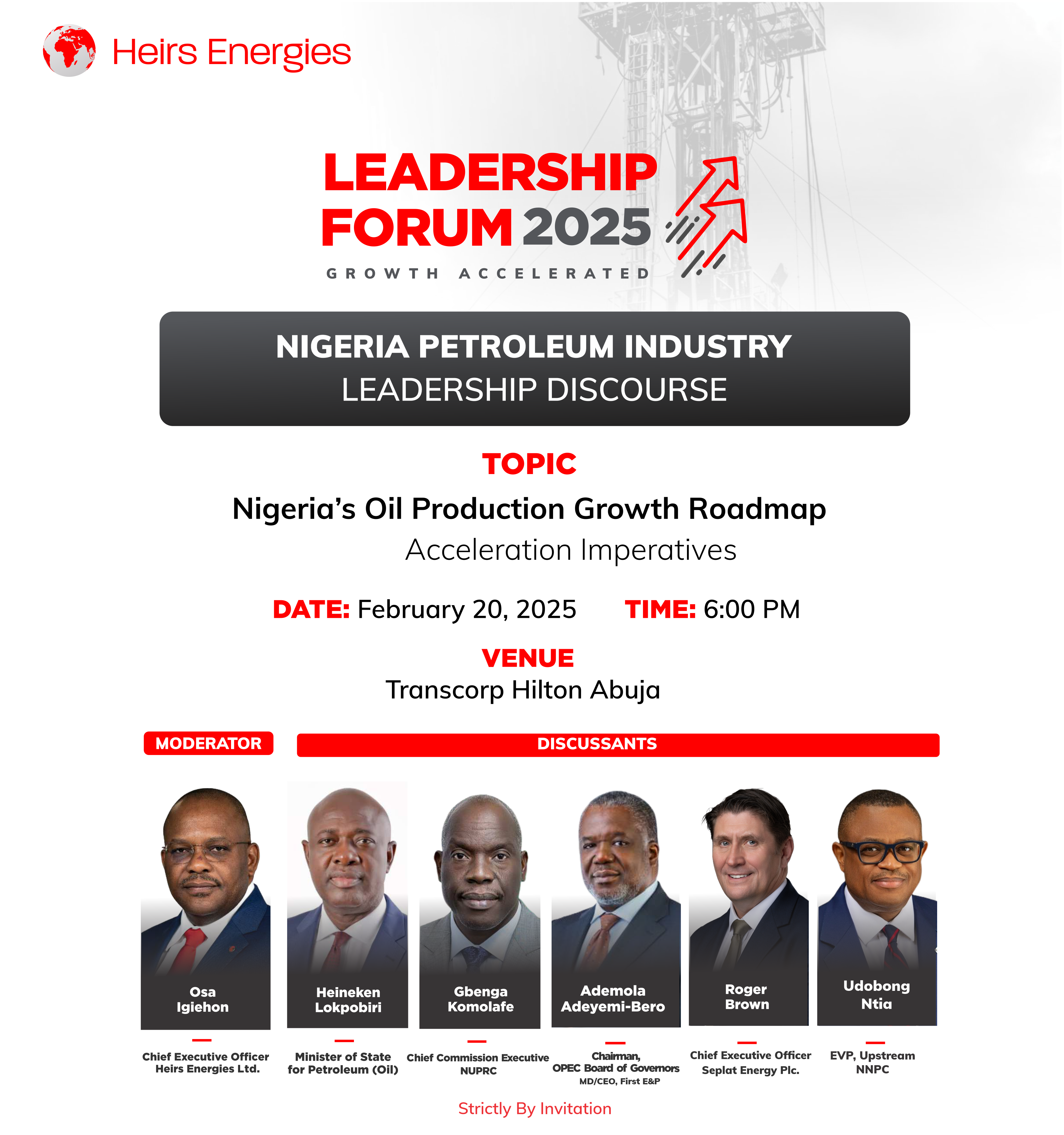
Heirs Energies Convenes Industry Titans to Drive Nigeria’s Oil Production Growth

Abuja, Nigeria | February 2025Heirs Energies, Africa’s foremost indigenous energy champion, will host the 2025 Heirs Energies Leadership Forum: Industry Leaders Discourse (ILD) on Thursday, 20 February 2025, at the Transcorp Hilton, Abuja. This high-level convening unites government decision-makers, global energy CEOs, and sector pioneers to forge actionable strategies for accelerating Nigeria’s oil production growth.

The forum, themed “Nigeria’s Oil Production Growth Roadmap – Acceleration Imperatives,” will feature distinguished speakers including Sen. Heineken Lokpobiri, Minister of State for Petroleum Resources (Oil); Engr. Gbenga Komolafe, Chief Commission Executive, NUPRC; Adewale Adeyemo-Bero, Chairman, OPEC Board of Governors and CEO of First E&P; and Roger Brown, CEO of Seplat Energy Plc. The session will be moderated by Osayande Igiehon, CEO of Heirs Energies.

With Nigeria targeting oil production of 2.1 million barrels per day (bpd) by 2025 and 2.7 million bpd by 2027, the discussion will address critical industry challenges while exploring opportunities for innovation and local industry leadership. The increasing role of Nigerian Independent Companies (NICs) in the sector will be a focal point, particularly as asset ownership transitions from International Oil Companies (IOCs) to local operators.

“Nigeria’s energy future cannot wait,” says Osayande Igiehon, CEO of Heirs Energies. “Through bold collaboration, we can transform challenges into opportunities – ramping up production, attracting investment, and powering sustainable development.” He added.

The forum will begin with a cocktail reception at 5:30 PM, followed by the panel discussion at 6:00 PM, and conclude with an exclusive networking dinner. The event will be livestreamed by Arise News and TVC to ensure broad access to these important discussions.

Heirs Energies continues to champion operational excellence, innovation, and local capacity development in Africa’s energy sector, driving energy sufficiency and economic transformation across the continent.

Heirs Energies Limited is Africa’s leading indigenous-owned integrated energy company, committed to meeting Africa’s unique energy needs while aligning with global sustainability goals.  Having a strong focus on innovation, environmental responsibility, and community development, Heirs Energies leads in the evolving energy landscape and contribute to a more prosperous Africa.

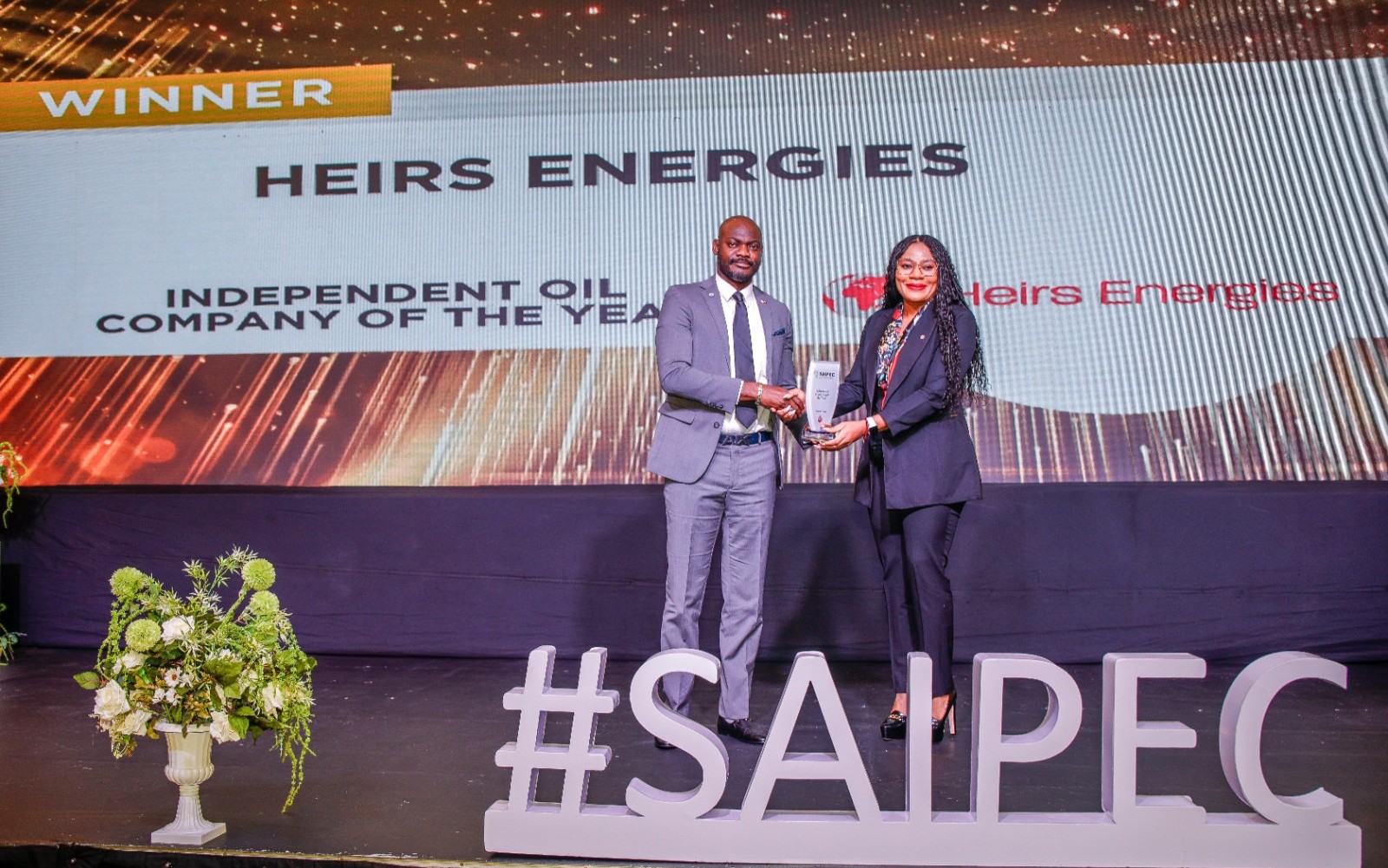
Heirs Energies Named “Independent Company of the Year” at SAIPEC 2025

Heirs at SAIPEC

Lagos, Nigeria – February 14, 2025 – Heirs Energies, Africa’s leading indigenous integrated energy company, has been awarded “Independent Company of the Year” at the Sub-Saharan Africa International Petroleum Exhibition and Conference (SAIPEC) 2025. This recognition highlights Heirs Energies’ commitment to operational excellence, innovation, and production growth, reinforcing its position as a leader in Africa’s energy sector.

This award is a validation of Heirs Energies’ belief that Africa’s energy future will be defined by action, not just dialogue. Four years ago, the company took over OML 17 with a clear mission: to transform a brownfield asset into a model of efficiency and growth. Since then, Heirs Energies has doubled hydrocarbon production to over 60,000 barrels per day, reactivated more than 60 wells in record time, and increased terminal delivery rates from 3% to 90%, significantly enhancing operational efficiency. The company has also expanded domestic gas supply, fueling industries, power plants, and communities, solidifying its role in Nigeria’s energy security agenda.

Speaking on the award, Osayande Igiehon, CEO of Heirs Energies, reaffirmed that this achievement serves as an impetus for more progress. He emphasized that challenges in the sector are not obstacles but opportunities for innovation, collaboration, and bold execution. He further reiterated the company’s commitment to optimizing production and ensuring that every molecule of energy contributes to Africa’s economic and industrial growth.

This milestone also reflects the strong partnerships Heirs Energies has built with regulators, JV partners, host communities, and government agencies. The company remains dedicated to sharing its expertise in brownfield engineering, contributing to the growth of the broader industry.

SAIPEC, hosted by PETAN (Petroleum Technology Association of Nigeria) in collaboration with African and global partners, is Sub-Saharan Africa’s premier petroleum exhibition and conference, bringing together industry leaders, policymakers, and investors. The “Independent Company of the Year” award recognizes companies that have demonstrated exceptional operational efficiency, innovation, and impact in Africa’s energy development.

This recognition cements Heirs Energies’ position as a transformational force in the industry, driving production growth, operational excellence, sustainability, and energy sufficiency for Africa’s future.

Heirs Energies Limited is Africa’s leading indigenous-owned integrated energy company, committed to meeting Africa’s unique energy needs while aligning with global sustainability goals.   Having a strong focus on innovation, environmental responsibility, and community development, Heirs Energies leads in the evolving energy landscape and contribute to a more prosperous Africa.

Heirs Energies’ CEO, Osayande Igiehon discussed energy sufficiency and the future of Nigeria’s energy sector

Osayande Igiehon, Chief Executive Officer and Managing Director at Heirs Energies, emphasizes in this interview, energy sufficiency is a key concern. In this exclusive conversation, the seasoned energy sector executive takes us through the company’s vision and its role in addressing energy issues in the country and the wider African continent.  He also shares insights into key trends shaping the sector.

Interviewer: As CEO of Heirs Energies, what are your vision and key strategies, drawing from your nearly three decades of experience in the energy sector?

Mr. Igiehon: Our ambition is clearly to be one of the top five Nigerian independents that emerge as international oil companies pull out of the upstream. However, our focus is not only upstream. We are also trying to build an integrated energy company and business with a strong footing in midstream and a strong integration with power.

Beyond Heirs Energies, Heirs Holdings has an integrated energy play, which is driven, on the one hand, by our growth in the upstream and midstream sectors and, on the other hand, by power through our investments in Transcorp. So, interlinkage from hydrocarbons to power will also be a key piece of our future.

Given my 30 years in the industry, I’m building and leading Heirs Energies to be a very strong, definitive, and differentiated company in the marketplace.

There are three key elements that underpin our approach to building Heirs Energies. This approach has seen the company grow from zero to acquiring an asset with no capability and no track record in 2021 to being recognized within three years as one of the leading Nigerian independent companies with a lot of promise.

The first thing is that we have tried to build a different, value-driven company. Everything we are doing is driven by value, and it quite significantly differentiates us from the activity-driven approach predominant in the industry.

The second thing we are building is an organization with a strong ethos founded on value and what we call our winning behaviors — our winning ways of working. These ways describe how our staff turn up and approach every activity, task, or objective that they are tasked with. In this way, we are building a company that achieves outcomes that outpace any of our peers.

Thirdly, we are building a company that will be an expert in brownfield engineering. One of the dominant mindsets in the industry is a greenfield approach, where projects are new, expensive, and time-consuming. However, we are building a brownfield excellence company that focuses on old assets, maximizing their value by working faster, thinking outside the box yet maintaining safety, and ensuring that we achieve outcomes that exceed expectations in every area.

Interviewer: What role do you see Africa playing in the global energy transition? What unique opportunities or challenges does the continent face?

Mr. Igiehon: The first thing to note here is that Africa’s role in the global energy transition is one that needs a lot of consideration.

First, let me talk about the reality of Africa, the starting point of where we are today. Today, we have a significant deficiency in energy supply. Many different quotes are being given, but it suffices to say that there’s a commonality that over 50% of our energy needs are unfulfilled. Over 50% of sub-Saharan Africans, for example, live with less than 20% of their electricity requirement.

This presents a critical point for us when it comes to considering our position going forward.

How do we address this huge energy deficiency in a world that is espousing energy transition? When you consider that energy transition involves moving from a system where the predominant energy supply or consumption is through petroleum products to a global system where the energy supply and consumption is mainly electricity, it becomes a critical issue.

There is a subtext and a growing push to move the global energy system from hydrocarbons to renewables. But over the past few years, we have seen that this agenda does not fully include Africa and that Africa needs to craft its own journey in this transition. Every system would transit; the conversation is where you are transiting from and where you are transiting to. And my position is that Africa’s destination in this transition has to be energy sufficiency.

We have to be on a journey of energy sufficiency, and that should be our focus. Our focus should not necessarily be on the energy transition as popularly posited — because this presents quite a number of challenges for us. This is especially true given that the Western world is keen, for stated environmental reasons, to move the energy system from one that is dominated by hydrocarbons to one that is dominated by renewables. The recent years have shown the underbelly and the weaknesses of this popular approach and the geopolitical undertones that underpin it.

For Africa, we need to focus on how we can be energy-sufficient in the shortest period of time to power our economies and improve the lives and livelihoods of our people.

This, for me, is the key consideration. And I do believe that getting to energy sufficiency for Africa is going to be by a combination of energy sources.

We need our hydrocarbons, which we are very blessed with, and we continue to find new sources of them every day. Our energy mix will also include renewables, both traditional renewables like hydro and emerging renewables like solar, wind, and many others.

It’s very important that we envision a future where the demand is better understood, the gap is better understood, and the supply and how we fulfill it are better understood. We need a consolidated and dedicated effort to bridge this gap.

I think Africa and African countries should focus on crafting energy-sufficiency plans rather than energy transition plans. These energy-sufficiency plans should take advantage of the developments from energy transition, such as new sources of energy, and use these as accelerators to bridge the gap, rather than making the transition itself the primary objective.

Interviewer: How is Heirs Energies addressing these?

Mr. Igiehon: I think I’m very proud to say that we are a significant producer of oil and gas in Nigeria. We produce roughly 3 to 4% of Nigeria’s oil production, as well as roughly 3 to 4% of Nigeria’s domestic gas supply.

We are very proud that all of our gas goes into the domestic market, driving power plants and providing feedstock to gas-based industries. This supports lives and livelihoods, creates jobs, and supplies energy for daily use to thousands of homes and people every day.

We intend to continue growing our gas supply into the domestic market and build a midstream position that will be targeted at the Nigerian domestic market, both looking at liquids and gases. So, we are uniquely poised in line with our vision to address Africa’s energy needs. Over the years, we have been hoping to build a global-scale business that will make an impact in the energy space in Africa.

Interviewer: What are the most significant trends shaping the energy sector, and how will they impact the future?

Mr. Igiehon: There are a number of key trends at play — globally and regionally/locally. There is an interplay between them, and it will have an imprint on what we will see in the energy industry going forward.

On a global level, there are a number of key factors to consider.

For me, the first one is the energy transition. It’s a key trend. This started in the last decade with a lot of momentum around changing the energy system. There’s a deliberate drive for acceleration of the energy system from, as mentioned, one dominated by hydrocarbon supply to one dominated by renewable supply.

But recent events have toned the drive for acceleration, and there is now a more balanced view globally on the pace at which this transition will happen; what the components of the future energy supply and demand system would be; and a clarity that hydrocarbons will definitely remain as one of the key sources of supply over time.

Interlinked with and underpinning this is a growing realization and common understanding that hydrocarbons are not the problem; the problem is emissions of greenhouse gases. Now, there is a more concerted effort to look at the issue more broadly, focusing on emission elimination and reduction, as opposed to the elimination of hydrocarbons. That is going to be a key factor. So, it’s not just about energy transition but also a shift in the thinking of what underpins the energy transition.

A second point is the global geopolitical balance in the world. we’ve seen lots of posturing. We’ve seen the Russia-Ukraine war dominate the space for the past 3 to 4 years. And we are now seeing a potentially expanding theater of conflict in the Middle East with the war between Israel and the proxies of Iran.

These two conflicts have shaped the global discourse and have an imprint on energy in the past years. I think these and other geopolitical tensions — and the quest for energy security by certain regions facing the realities of declining hydrocarbon reserves — are going to shape the global energy landscape.

Thirdly, significant hydrocarbon discoveries have been made in existing and new places across the world. For example, Guyana has had huge finds, and Namibia has reported significant exploration and finds. These discoveries create a different dynamic of increased hydrocarbon supply, potentially offering hydrocarbons at cheaper rates than alternatives. This will be a key consideration for many countries as they chart the course of energy supply and energy security.

Source: Energy Utilities

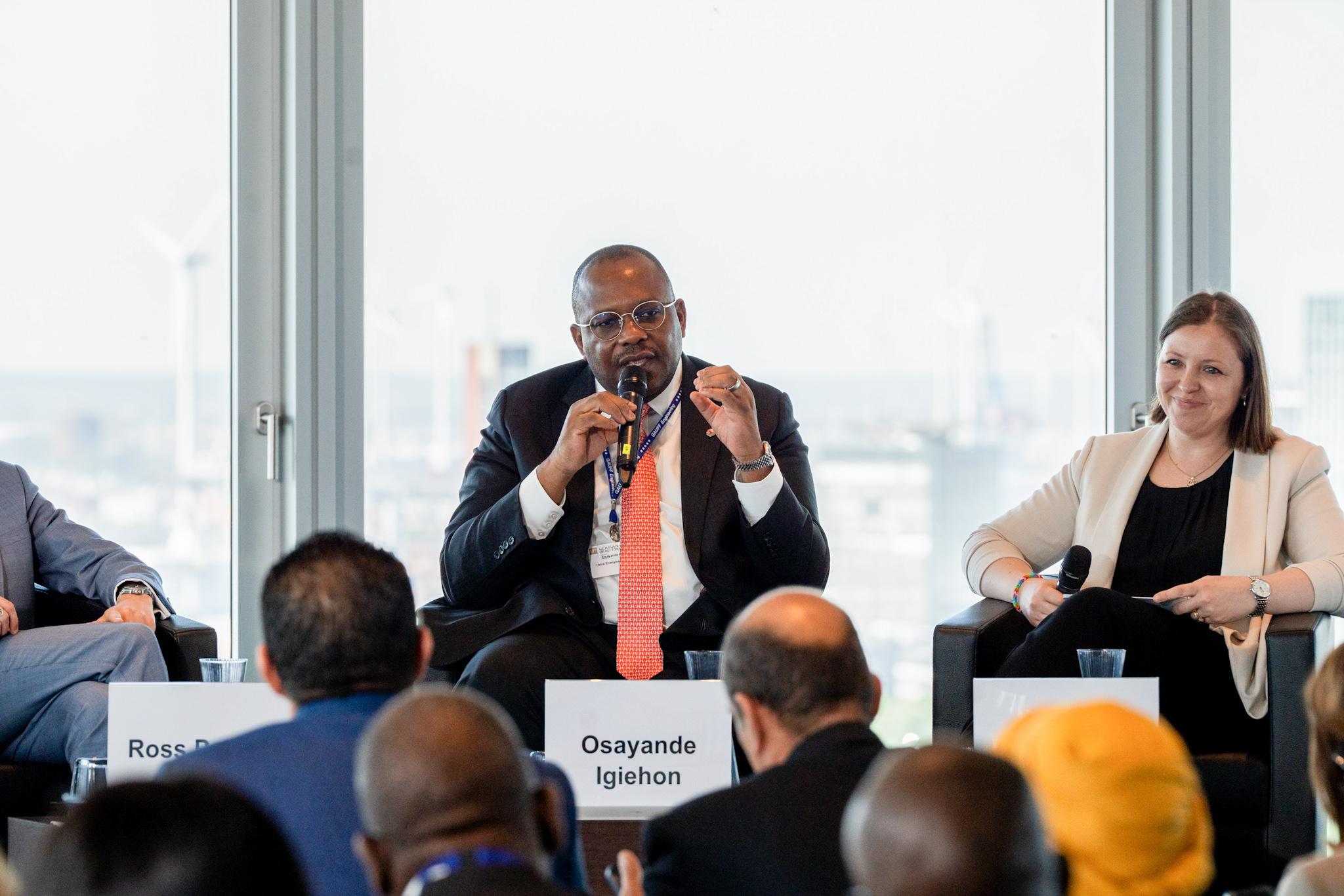
Heirs Energies CEO Advocates for Energy Sufficiency and Sustainable Partnerships at the 17th German-African Energy Forum

Osa Igiehon

We are proud to share that our CEO, Osa Igiehon, recently participated in a thought-provoking panel discussion titled “Africa’s Climate Action is Gaining Momentum” at the 17th German-African Energy Forum in Hamburg, Germany.

The forum brought together key stakeholders from the energy sector to discuss Africa’s climate action, green industrialization, and the role of the private sector in driving sustainable energy transition.

During the panel, moderated by Katarina Kunert from Afrika-Verein, Osa emphasized the critical importance of achieving energy sufficiency in Africa as a foundation for sustainable development and economic growth. He highlighted our commitment at Heirs Energies to delivering more energy into the ecosystem in a manner that effectively meets the growing energy demands while minimizing the overall carbon footprint.

Osa stressed that Africa’s energy transition must be one that takes Africa from a current state of energy deficiency to a future of energy sufficiency. To him, “energy Sufficiency for Africa is a key imperative”. He posited that within the context of the global focus on achieving a low-carbon energy future to address climate concerns, we must not overlook the pressing need to address energy poverty and ensure reliable access to electricity for all Africans.”

He also shed light on our multi-energy approach at Heirs Holdings Group, spanning from gas production to power generation and distribution, which positions us to tackle Africa’s energy issues comprehensively and sustainably.

Osa highlighted our role in the Federal Government of Nigeria’s electrification drive, supplying gas to three power plants in eastern Nigeria and contributing to the journey towards a lower carbon footprint and energy sufficiency.

When asked about the kind of partnerships needed to develop Africa’s energy landscape in a future-oriented manner, Osa emphasized the importance of collaboration and the philosophy of Africapitalism, which underpins our parent company, Heirs Holdings. Africapitalism recognizes the critical role of the private sector in driving social and economic progress.

“Shared prosperity for all stakeholders are at the heart of Heirs Energies’ approach to partnerships,” Osa explained. “We believe that true partnerships should be enabling and symbiotic, rather than extractive. It should be a win-win and not win-lose, ensuring that all parties involved benefit from the collaboration.”

He further emphasized that we at Heirs Energies actively seek partnerships with governments, international organizations, and other industry stakeholders to accelerate Africa’s energy transformation. By working together, we believe that innovative solutions can be developed, investments attracted, and an enabling environment created for sustainable energy development across the continent.

The panel also featured insightful contributions from Christine Amira, Sustainability and Communications expert at WILO SE; Ross Palmer, Associate Director Energy Eurasia MEA at the European Bank for Reconstruction and Development; and Samir Rachidi, Director General of IRESEN, Morocco.

As Africa continues to gain momentum in its climate action, we at Heirs Energies remain committed to driving sustainable energy transition and forging collaborative partnerships to achieve energy sufficiency and greener industrialization across the continent.

The insights shared by our CEO, Osa Igiehon, at the 17th German-African Energy Forum underline our dedication to shaping Africa’s energy landscape for a more prosperous and sustainable future.

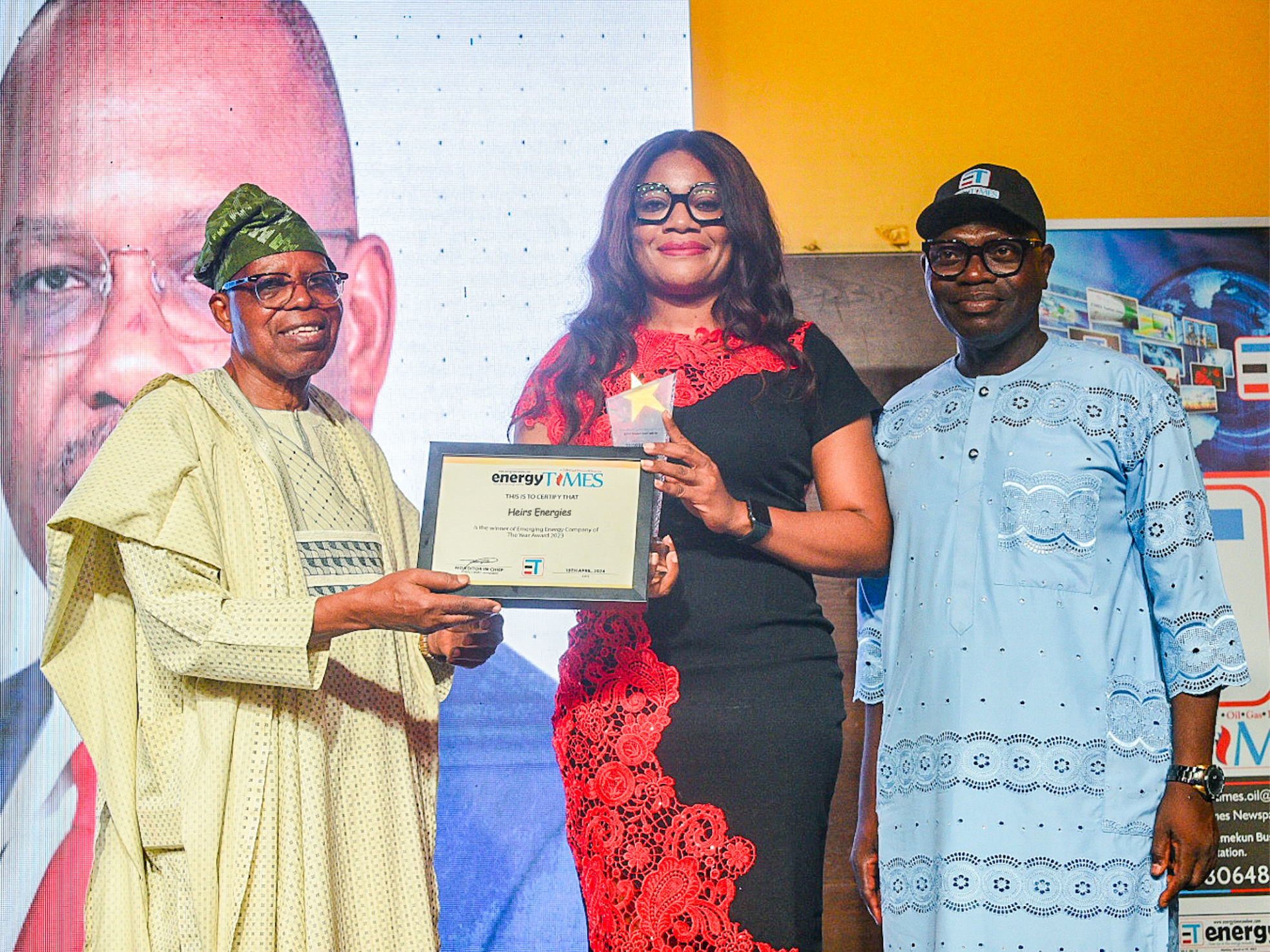
Heirs Energies Named “Emerging Energy Company of the Year” at Inaugural Energy Times Awards

LAGOS, 23/04/2024 – Heirs Energies, Africa’s leading integrated energy company has announced that it has been awarded the “Emerging Energy Company of the Year” at the inaugural edition of the Energy Times Awards. The ceremony, held in Lagos on Friday, April 19, 2024, recognised Heirs Energies for its remarkable growth and substantial investments in the energy sector since its inception in 2021.

The Energy Times Awards aim to celebrate outstanding achievements and innovations within the energy industry, highlighting companies and individuals driving positive change and making significant contributions to the sector’s advancement.

Heirs Energies’ recognition as the “Emerging Energy Company of the Year” underscores its commitment to energy solutions and its rapid growth and investment within the energy sector. The company’s oil production has grown from about 27,000 barrels per day (bpd) at the take-over of operational control in July 2021, to a peak of over 50,000bpd 100 days after the asset takeover in 2021.

“We are honored to receive the award of ‘Emerging Energy Company of the Year’ at the inaugural Energy Times Awards,” said Osa Igiehon, Chief Executive Officer of Heirs Energies. “This recognition is a demonstration of the dedication and hard work of our team in the last 3 years, as well as our commitment to driving positive and innovative change in the energy sector. We are proud of the progress we have made since inception in 2021 and remain steadfast in our mission to meet Africa’s unique needs,” he added.

Since its establishment in 2021, Heirs Energies has become an important contributor to the domestic gas supply in Nigeria. It achieved first gas from the Agbada Non-Associated Gas (NAG) Plant in November 2021, after taking over the project in May 2021. The significance of this milestone is highlighted by the fact that the Agbada NAG plant had been under construction for over 10 years by the previous operator and upon takeover, the company demonstrated capability and expertise by quickly bringing the plant to mechanical completion and identifying further growth opportunities.


Heirs Energies has continued to expand its footprint and has become a key contributor to the domestic gas market, allowing for an increased supply to gas-based industries and gas-powered electricity generation companies.

Heirs Energies Limited (formerly HeirsHoldings Oil & Gas Limited) is Africa’s largest indigenous-owned integrated energy company, committed to meeting Africa’s unique energy needs whilst aligning with global sustainability goals. With a strong focus on innovation, environmental responsibility, and community development, Heirs Energies leads the evolving energy landscape and contributes to a more prosperous Africa.